12 summers with Joey changed my life
Connect with Eric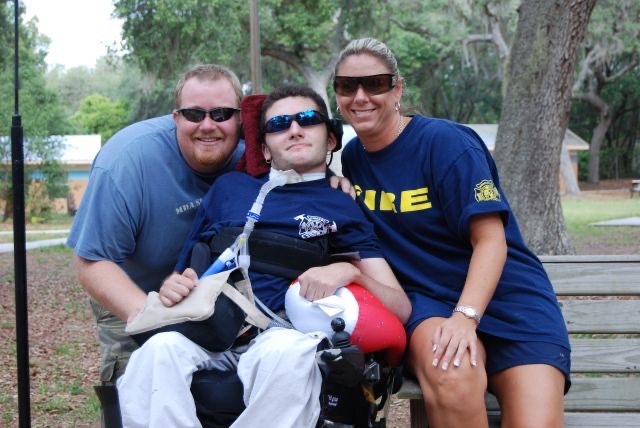
by Eric Most
My children have been on my mind a lot lately. Of course, as a dad, I’m always thinking about them, but they’re entering those formative preteen years that require a bit more intentional parenting. It’s been on my heart to consider how I’m teaching them to make their faith their own.
The Bible tells parents to train up children in the way they should go. Have I been successful so far? How am I teaching my children to love God and to be good stewards?
My family has a phrase: “We don’t watch things, we do things.” I want my boys to know this isn’t just a phrase we say, but something that stems from an experience I had when I was only a little bit older than they are now.
I regularly share about whole LIFE stewardship – how to be generous with our labor, influence, finances, and expertise. And I believe that stewardship is best taught through action.
When I was 15, my high school football coach asked if I’d consider volunteering at a summer camp for kids with muscular dystrophy. I didn’t fully grasp what I was signing up for, but I said yes. At that age, I thought I was following my coach’s direction. Now, I see God’s hand orienting my life toward something greater than myself.
That camp was a haven for kids with disabilities. For one week each summer, they could just be kids – have water fights, do arts and crafts, and even dance at the end-of-week party. As a volunteer, I’d be paired with one camper to help him get from activity to activity, eat meals, prepare for bed, and even respond in medical emergencies.
I arrived early for some training and got to know the other counselors, many who’d been volunteering for years and had formed relationships with the campers. Generally, they were assigned to the same kid year after year.
I kept hearing about Joey Pizzurro, a camper who seemed to have a reputation – and not a good one. The day came when we were assigned our campers for the week. Of course, I was assigned to Joey.
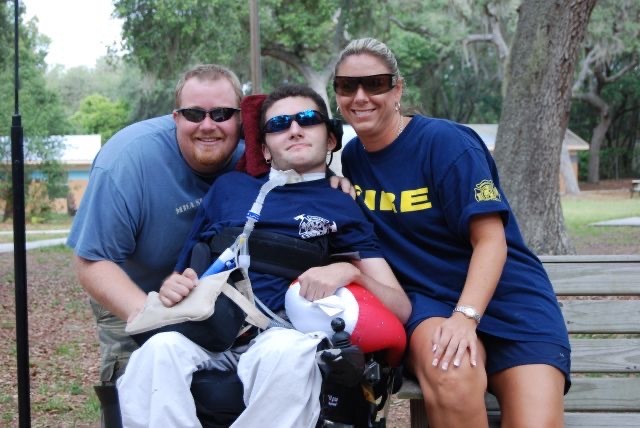
Me and Joey with Nikki, his camp nurse, 2007
I ended up being Joey’s counselor every summer for 12 years. In my first year, he was a young child using a walker and still somewhat mobile. When he aged out of the program at 18, he was in an electric wheelchair, breathing and being fed through tubes. It turned out he wasn’t the troublemaker the other counselors warned about. He was just a misunderstood prankster who wanted to have fun and bring joy and laughter to others.
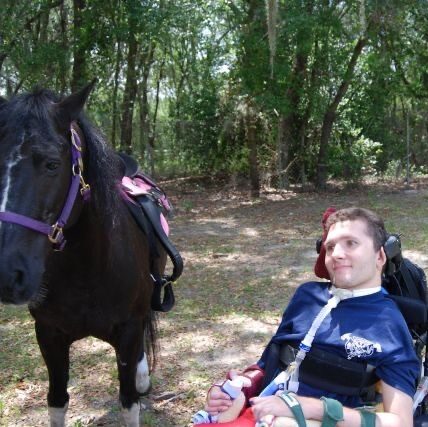
Joey Pizzurro at camp, 2007
During those camp summers, I gained more than I ever gave. He taught me how to see people the way God sees them. He taught me how to give without expecting anything in return. He taught me how to live with joy in the face of suffering.
Joey changed me. And through him, God showed me what stewardship really looks like. He taught me three lessons I want my boys to learn:
1. Generosity is more than financial
“As each has received a gift, use it to serve one another, as good stewards of God’s varied grace.”
– 1 Peter 4:10
As adults, we often associate stewardship with money. But for kids, it starts with giving their time, energy, and presence. As Joey’s counselor, I sought to be generous and gave sacrificially what I could at that age.
One summer, Joey needed help using the bathroom – not once, but three times – in the middle of the night. So I got up each time. It wasn’t glamorous, and it wasn’t easy, but it was the right thing to do. Generosity isn’t just financial; it’s being willing to serve in unseen and inconvenient ways. That’s the kind of stewardship I want to pass on.
2. Live for others, not for yourself
“Do nothing from selfish ambition or conceit, but in humility count others more significant than yourselves. Let each of you look not only to his own interests, but also to the interests of others.”
– Philippians 2:3–4
In the arts and crafts room one summer, I made the mistake of complaining that the hard metal chairs were uncomfortable. Joey’s disease had been progressing and he couldn’t speak well anymore, but he managed to get this message across: “At least you can get up.”
That quiet rebuke hit hard. We don’t live just to make our own lives comfortable. We live to serve, to lift others up, and to use what we’ve been given for their good. Joey reminded me that even suffering can be a classroom of grace.
3. Don’t waste life on trivialities
“For all that is in the world – the desires of the flesh and the desires of the eyes and pride of life – is not from the Father but is from the world.”
– 1 John 2:16
Francis Chan uses a powerful illustrationopens in a new tab to visualize what it means to live in preparation for eternity: Using a rope to represent the length of our individual lives, he contrasts how short our time is here compared to forever in heaven. The actions we take daily should not be self-serving, but with our eyes directed ahead. Our goal should be to finishing the race here and receiving the crown of righteousness in heaven.opens in a new tab
One summer, my sister was getting married in Hawaii, and our family planned to be there for two weeks. But the dates overlapped with the camp Joey had been looking forward to all year. So instead of joining the family vacation, I cut my trip short to come back and be with him after the ceremony. Making the choice to show up for Joey during the week that mattered most to him was hard, but it was the right choice in the long run.
I want my boys to know this story because stewardship isn’t about giving because we’re supposed to. It’s about giving because we want to.
Everything we have – our time, energy, talents, money, even our relationships? They all belong to God. He’s entrusted us with these gifts so we can use them to serve others and bring Him glory. The 12 summers with Joey taught me what it really means to give of myself. That’s the kind of life I hope my boys grow up wanting to live.

Joey Pizzurro, 2014
 3 habits of radically generous business owners
 3 steps to leaving a generous legacy
 5 things you may not know about NCF Rocky Mountains
 What my son’s hiking trip taught me about faith and giving